VAT Compliance at the Core of Systems (ERP, Invoicing, Accounting)
VAT now sits at the intersection of tax regulation and information systems.
Historically, compliance relied mainly on a reporting-based approach, taking place downstream of transactions.
Today, while reporting obligations remain essential, VAT compliance is increasingly built upstream, through the quality and reliability of data generated by ERP systems, invoicing platforms, and accounting tools.
This shift is part of a broader transformation of taxation, driven by the rise of digital tax (tax digital) and the growing automation of data transmission to tax authorities.
In this context, at VAT Solutions, we support our clients by embedding VAT rules directly into the core of their systems.
Our objective is clear: to secure the production of reliable, consistent, and compliant VAT information from the outset, while reducing reliance on manual adjustments, which are a source of risk and inefficiency.
This approach fully aligns with the evolving practices of tax authorities, which are increasingly moving toward automated control models based on the analysis of transactional data rather than solely on the documentary review of invoices.
Evolution of VAT Tax Audits
VAT Tax Audits: From Invoices to Data
VAT tax audits are evolving rapidly.
Long based on the analysis of documents (invoices, contracts), they now rely on the large-scale use of data extracted from companies’ information systems (ERP, invoicing, accounting).
Tax authorities now have advanced analytical capabilities enabling them to:
- cross-check reported and transactional data,
- detect inconsistencies at scale,
- identify anomalies in real time or near real time.
By way of example, in France, this transformation is already tangible: in 2025, 56% of corporate tax audits were targeted using artificial intelligence (Source: 2025 Tax Audit Report of the French Public Finances).
This figure is likely to increase in the coming years with the implementation of e-invoicing and the transmission of data (e-reporting).
In this context, the challenge is no longer limited to the compliance of an individual invoice.
It is now the quality of the data and the overall consistency of data flows that are being scrutinized.
This shift is part of a broader movement toward VAT digitalization, marked by the widespread adoption of e-invoicing and e-reporting systems.
Already in force in several Member States, these systems are expected to become standard across the European Union by 2030.
They involve the continuous transmission of VAT data to tax authorities in near real time, thereby significantly strengthening their audit capabilities.
VAT Tax Audits: The Challenge of VAT Compliance for Electronic Audit Files
Alongside these developments, an initiative led by the OECD has emerged with the introduction of standardized audit files, also known as SAF-T (Standard Audit File for Tax). This format serves a dual purpose: to standardize accounting and tax data in order to facilitate audits and enhance the effectiveness of tax controls.
In this context, many countries now require the submission of standardized audit files during tax audits.
This is notably the case for:
- the FAIA (Fichier d’Audit Informatisé de l’Administration) in Luxembourg,
which requires taxpayers using computerized accounting systems to be able to provide, upon request from the Registration Duties, Estates and VAT Authority (AEDT), all their electronic accounting data in accordance with technical specifications defined by the authority. The FAIA, formalized as a recommendation by the AEDT, constitutes a standard data export format, submitted upon request and structured in XML for VAT audit purposes;
- the FEC (Fichier des Écritures Comptables) in France,
which includes all accounting entries of a company for a given financial year. Generated directly from the accounting software, it must comply with a format strictly defined by the tax authorities.
These mechanisms enable tax authorities to fully reconstruct a company’s transactions and verify the consistency of the VAT treatments applied.
In this context, the quality of the extracted data is critical.
Inadequate system configuration may lead to inconsistencies, anomalies, or even difficulties in producing compliant files, with direct consequences in the event of a tax audit.
VAT Solutions Support in VAT in the Digital Age : The Operational Approach
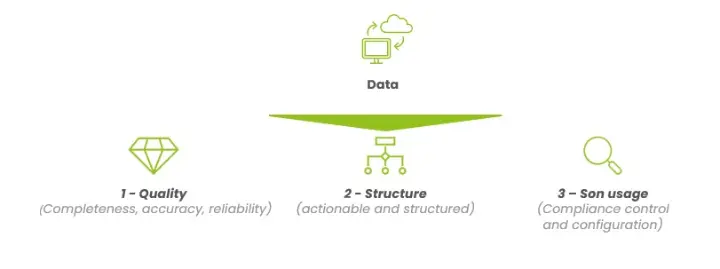
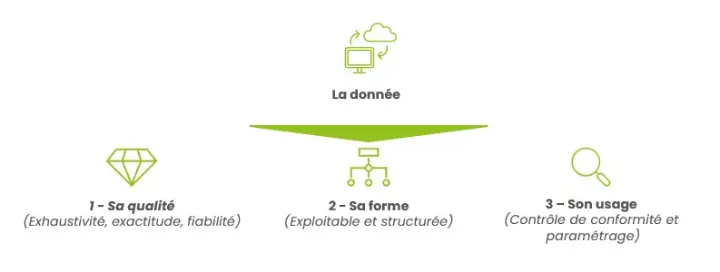
With the VAT and digital developments mentioned above, companies will need to ensure that their data meets certain requirements in terms of quality, format, and usability.
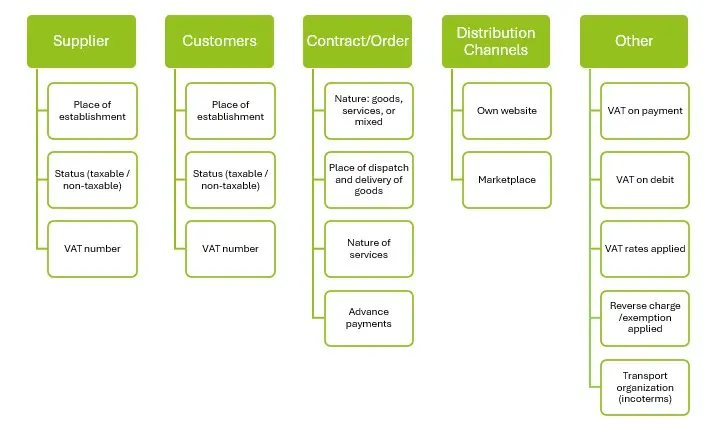
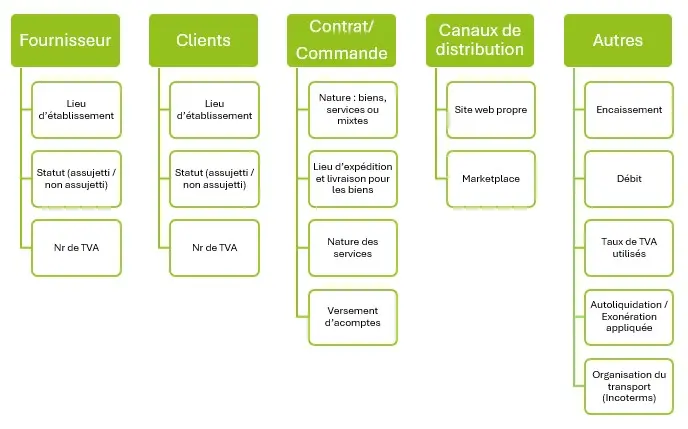
But what are the essential VAT data points?
To correctly analyse a transaction, apply the appropriate VAT treatment (output VAT / exempt / reverse charge, etc.), and include the correct invoice mentions, a number of key pieces of information are required (non-exhaustive list):
VAT Mapping as a Tool for Data Reliability and Structuring
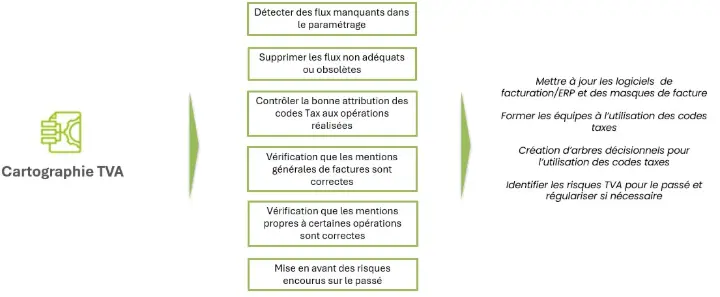
Our approach is based on a fundamental principle: relevant VAT configuration can only be defined through a mapping of the company’s actual flows.
We therefore intervene at the early stages of projects by organising scoping workshops aimed at analysing your business activities, sales and purchase flows, and reporting practices. This step makes it possible to identify gaps between operational reality and the VAT rules applied.
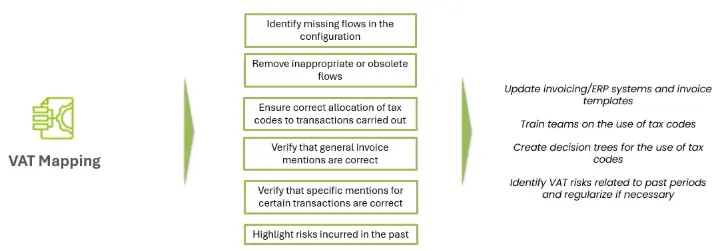
On this basis, we translate VAT rules into your systems, whether ERP, invoicing solutions, or accounting tools. This includes defining and structuring VAT codes, aligning them with local and international reporting requirements, and, upon request, taking into account constraints related to e-invoicing and audit file requirements.
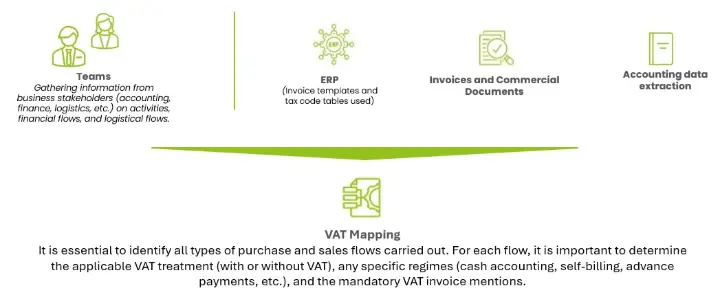
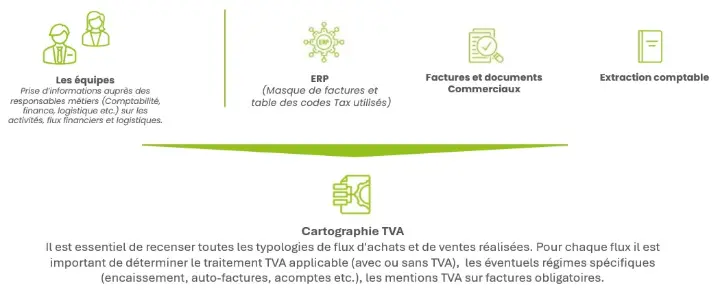
Our objective is to secure the entire processing chain, ensuring that the data produced can be directly used for VAT reporting, filings, and tax audits.
Ongoing Support and Daily Data Use
Beyond system configuration, we place particular emphasis on ensuring that operational teams fully understand and adopt VAT rules.
We therefore develop tools tailored to your organisation, such as VAT treatment matrices (sales and purchases), mappings between business rules and system configuration, as well as decision trees designed to guide users in their choices.
These tools help secure practices, reduce errors, and ensure long-term consistency in the application of VAT rules.
Training and Support to Ensure Long-Term Security
Implementing effective VAT configuration cannot be separated from supporting the teams involved.
We therefore work with accounting, finance, and operational teams to explain applicable rules, train them in the use of tools, and secure the initial rollout phases. This approach ensures a practical and sustainable implementation.
We also remain available over the long term to support changes in your business activities, systems, or regulations through helpdesk (Helpline) contracts.
Why Choose Us?
VAT Solutions’ VAT Expertise
For over 15 years, VAT Solutions has been supporting companies operating in complex cross-border environments by providing VAT solutions that are both technical and operational.
Our positioning is based on a strong conviction:
VAT compliance must be embedded at the core of processes and systems, rather than being addressed only downstream.
This approach enables us to deliver sustainable solutions tailored to regulatory and technological developments.
Recognised Expertise in Systems and Complex Environments
We support our clients across various environments:
- ERP systems (SAP, Odoo, JD Edwards, Microsoft Dynamics 365, Oracle, etc.),
- accounting tools (BOB, Cegid, Sage, etc.),
- invoicing systems.
Our experience spans a wide range of sectors, including the public sector, pharmaceuticals, non-profit organisations, the art sector, transport and logistics, among others.
This diversity allows us to adopt a pragmatic approach tailored to the specific needs of each organisation.
VAT Expertise and Odoo
As part of our activities, we have developed specific expertise in Odoo, which we also use for our own needs.
This hands-on experience enables us to operate effectively on:
- the configuration of fiscal positions and taxes,
- the automation of VAT treatments on sales and purchases,
- the management of input VAT recovery rights, including in complex situations,
- the alignment between operational flows, reporting obligations, and reporting constraints.
We work in close collaboration with integrators to ensure consistent and efficient implementation.

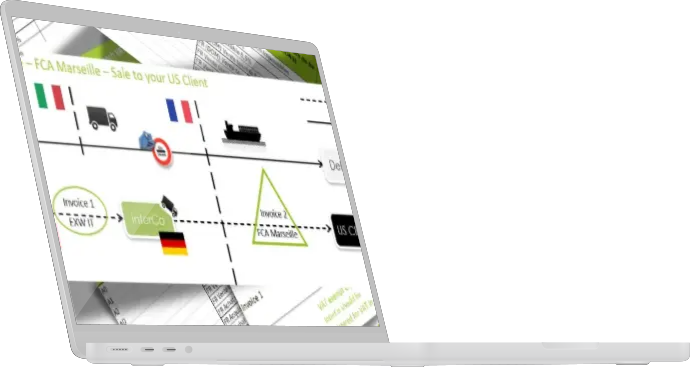
VAT mapping: Essential for VAT compliance, indispensable for e-invoicing
This service enables companies to secure and ensure the compliance of their cross-border transactions.
It identifies transaction flows (goods/services, purchases/sales), provides a VAT diagnostic (exemptions, reverse charge, input VAT deduction, foreign VAT numbers, VAT return and ESL reporting, invoice requirements), and helps detect potential anomalies.